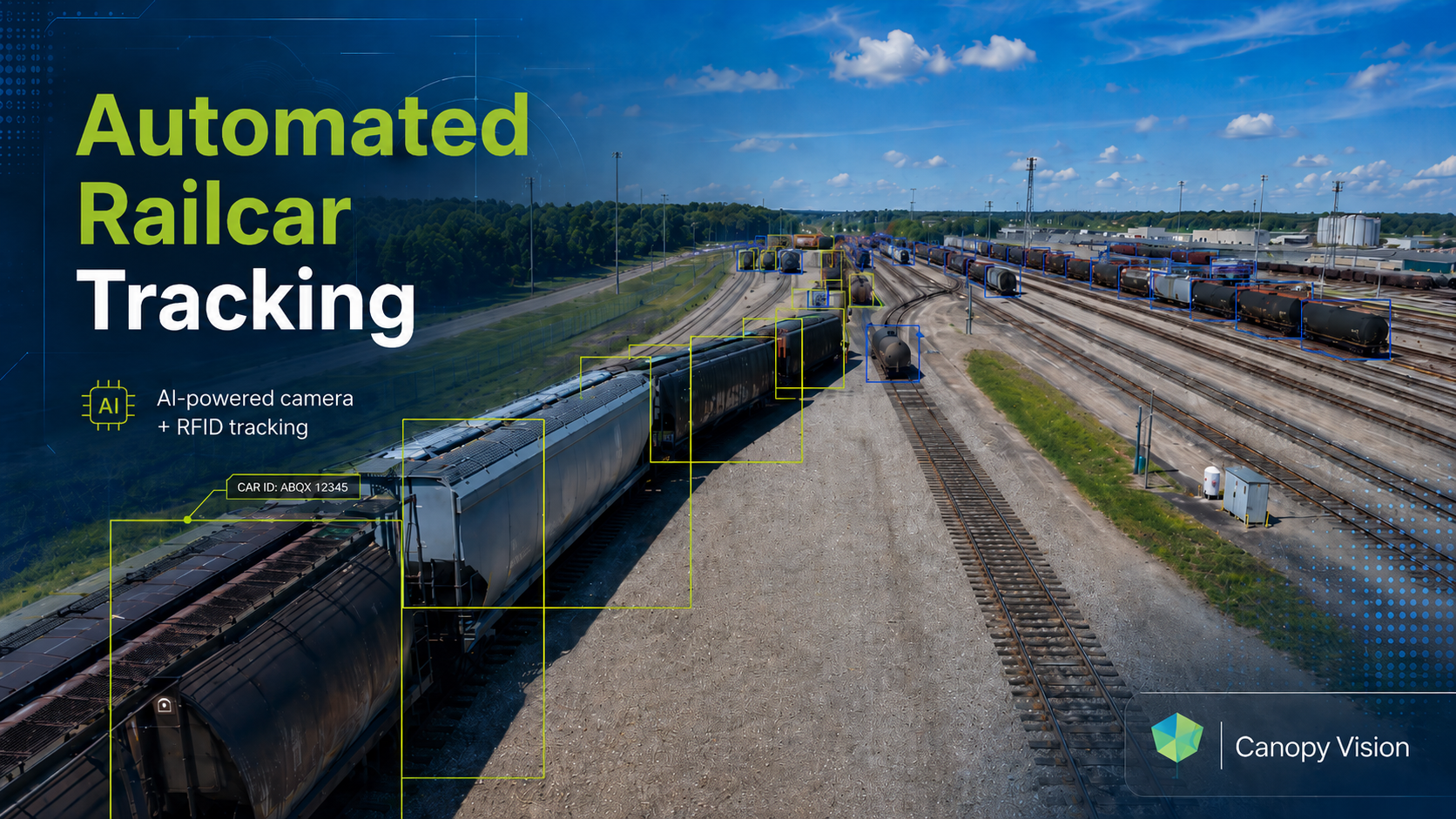
Automated railcar tracking can mean different things to different people.
For railroads moving cars across the country, railcar tracking happens at a much higher level than it does for industrial facilities trying to manage cars within their own rail yard. In either scenario, the idea is the same: technology automatically maintains the record as cars move from point A to point B.
Without technology automatically tracking cars as they move, facilities are left to rely on manual processes — like a person updating a system, or someone walking down a rail yard to note which cars are on which tracks.
This article explains how automated railcar tracking is achieved in practice and what technologies exist to accomplish that goal. Generally speaking, this article focuses on facilities that manage cars within their own rail yard, rather than larger railroads moving cars across the country.
Summary: What Automated Railcar Tracking Means for Industrial Facilities
Automated railcar tracking uses technology to help facilities know where railcars are located within a yard without relying entirely on manual updates, walkdowns, or operator-entered records.
For industrial sites, the goal is usually not national rail shipment visibility. Instead, the goal is accurate, real-time or near-real-time tracking of cars as they move between tracks, switches, loading areas, unloading areas, and storage locations.
Common approaches include GPS devices, AEI RFID readers, track wheel sensors, automated switch controls, and camera-based AI systems. Each option has tradeoffs related to cost, installation complexity, accuracy, infrastructure requirements, and how well it fits the layout of the rail yard.
For many private industrial rail yards, a practical solution may involve combining existing railcar identification methods, such as AEI tags, with cameras and AI to reduce the amount of hardware needed while improving visibility into car movement across the yard.
Why Manual Railcar Tracking Creates Problems
Within a rail yard, you could have anywhere from two switches to 20 or more switches. Every switch creates the opportunity for a car to move to one track segment or another.
These tracks often have familiar names, like “Track 1” or “West Track,” so that rail and operations employees can easily communicate about where to move the railcars.
Without automated tracking, rail yards rely on the people who move the cars, or other people in the yard, to document which cars are on which tracks.
Sometimes this happens while cars are moving. For example, the locomotive operator might update a database to document that 12 cars moved from Track 1 to Track 2. At other facilities, this might require periodic walkdowns of the yard, where an employee writes down every car number in order on each section of track.
With these manual processes, there can be a delay between when cars are moved and when the system or database is updated. Errors in these human processes can also lead to issues where the system or database says certain cars are on a track, but in the field, the track is empty.
For larger companies, this becomes an annoying and costly problem. Logistics and supply chain personnel are left waiting for on-site operations personnel to update the database so they can properly plan future movements. When there is an issue, it can cause hours of wasted time in the yard trying to correct the record and find the missing car.
With technology, cars can be tracked automatically without the same reliance on people.
A few options exist to achieve this goal:
- GPS devices on the cars
- RFID readers
- Track wheel sensors
- Automated switches and controls
- Cameras and AI
GPS Devices
Since most facilities do not own their own cars, GPS devices are usually not a viable option.
Even though the price of GPS devices has gone down, with many devices lasting for several years on a single battery, the cars are often not owned by the facility that needs to track them in the yard. Cars might be owned by the railroad or leased from another third party.
Even if the railroad or third party added GPS devices to all of their cars, that GPS data would still need to be made available to the facility. Considering all the combinations of owners, devices, and systems involved, and with no current standard for GPS-based railcar tracking across every scenario, this is not likely to be an option unless it is for a facility that owns its own cars.
RFID Readers
RFID is the basis for many railcar tracking systems.
Every railcar, at least in the United States, has a specific type of RFID tag called an AEI tag. This standard tag identifies the car number, owner, and other important information.
Railroads and facilities can install AEI tag readers to read the tags of cars as they pass by. For many facilities, the people who walk the yard every day use a mobile AEI tag reader to scan the cars as they walk the tracks. This helps avoid manually entering car numbers into a keypad or writing them down on a paper form.
Cars have two tags, and AEI readers can read tags on cars moving at slow or fast speeds, making RFID a very effective way to identify cars as they move.
However, there are a few downsides to using RFID readers for fully automated railcar tracking in a large yard. At entrance/exit and other pass-by points in industrial and private yards, those issues often show up as shunting noise, cross-track false reads, and delayed consist data—see common AEI RFID reader issues at industrial facilities and private rail yards for a deeper look at those scenarios.
Detection of Cars on Adjacent Tracks
If you have multiple tracks in parallel, RFID readers can pick up erroneous readings from cars on nearby tracks.
For example, if you have a main track that splits into 10 separate tracks or berths, cars moving on one berth might be picked up by the RFID reader on an adjacent berth. This can create a lot of noise and make it difficult to use RFID readers for track layouts like this.
There are some solutions, such as installing metal panels between the tracks to prevent unwanted reads, but those solutions increase the cost and complexity of deployment.
Cost Per RFID Reader
If you need to install RFID readers on every track segment in a large yard, that might require 20 or more RFID readers.
Each RFID reader has a cost, including hardware, cables, conduit, and AEI tag licensing. Even more importantly, each RFID reader also needs power and connectivity, whether through Ethernet or cellular.
In a yard with 20 switches, the cost to install RFID readers and the required infrastructure could reach $500,000 or more.
Noisy Data
If you have a yard where cars are being switched and spotted back and forth, which is basically every yard, RFID readers will see multiple reads of the same tag.
This can be difficult to parse properly. The system needs to identify which direction the car was moving and where the car actually ended up. Track sensors can help with this, but noisy data is still a common problem that many yards have to deal with.
In addition to the noisy data, you also need a system that can properly ingest RFID reads and update the record of which cars are on which tracks. This is not as simple as it sounds when cars are moving up and down tracks with gaps between the RFID reader locations.
Track Wheel Sensors
Imagine the same track layout described above, where one main track splits into 10 separate tracks.
You could avoid the issue of RFID readers detecting cars on adjacent tracks by installing track sensors on each track and using logic to process where the cars end up. If you have one RFID reader on the main track and then use track sensors on the 10 separate tracks, you might be able to use an algorithm that looks at timestamps and track sensor data to deduce which cars ended up on which tracks.
This is not a foolproof method.
The back-and-forth switching of cars makes the logic increasingly difficult. While this might cost less than installing AEI readers at every track, it still comes with significant cost and installation burden because cables and conduit need to be run to all 10 track locations.
Sophisticated software is still needed, and there are still opportunities for error in the data.
Automated Switches and Controls
If you have a yard with fully automated switches, or at least sensors on every switch, then software can more confidently determine where cars went.
You still need a combination of RFID readers and track sensors, but with knowledge of each switch’s position at every point in time, the logic becomes much easier.
However, automated switches and control systems have a large cost to implement. Because of that, this is often not the reality at most private rail yards.
Cameras and AI
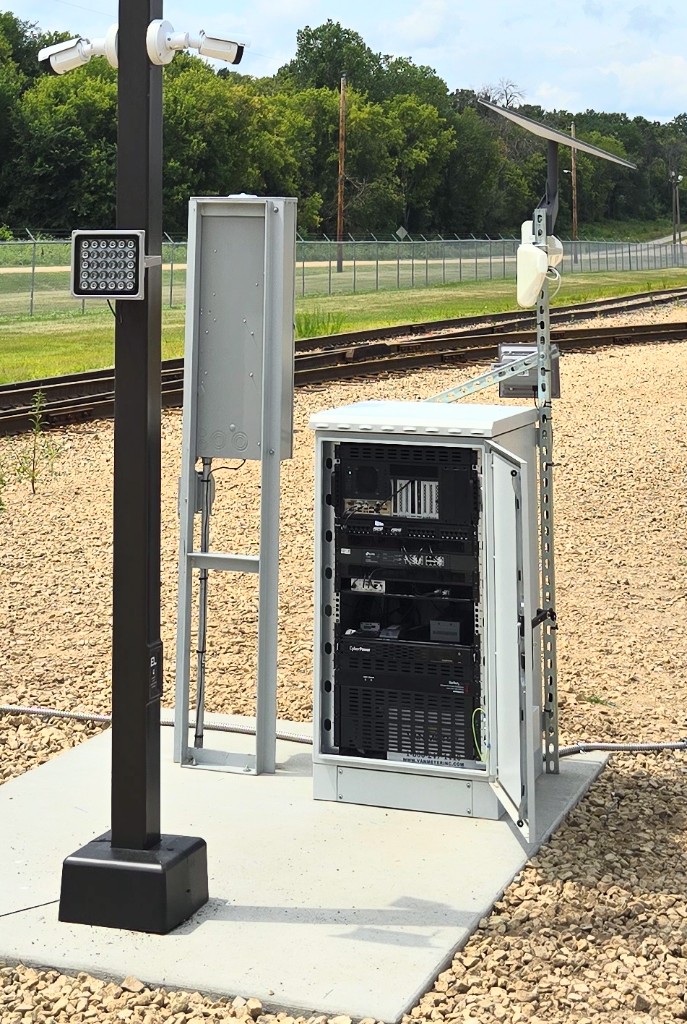
At Canopy Vision, we have pioneered a unique AI-based solution that combines traditional AEI RFID readers with overhead cameras to track cars as they move within the yard.
Here is how it works.
When cars pass by the RFID reader, they are identified by their AEI tags. From there, overhead cameras track the cars visually as they move to different track segments. As long as the cameras can see where the cars go, the AI can track them.
The data from the RFID reader is used to match the visual car detection with a car number. That information then goes into additional logic that updates the record of which cars are on which tracks.
This same concept can extend to larger yards by adding additional camera nodes and allowing the camera systems to communicate through a central gateway that proxies requests to and from multiple edge devices.
Like any system, this approach is not perfect. Heavy snow, rain, fog, or other visibility issues can affect camera-based tracking. However, it allows a significant number of cars to be tracked at a much lower cost than many traditional approaches.
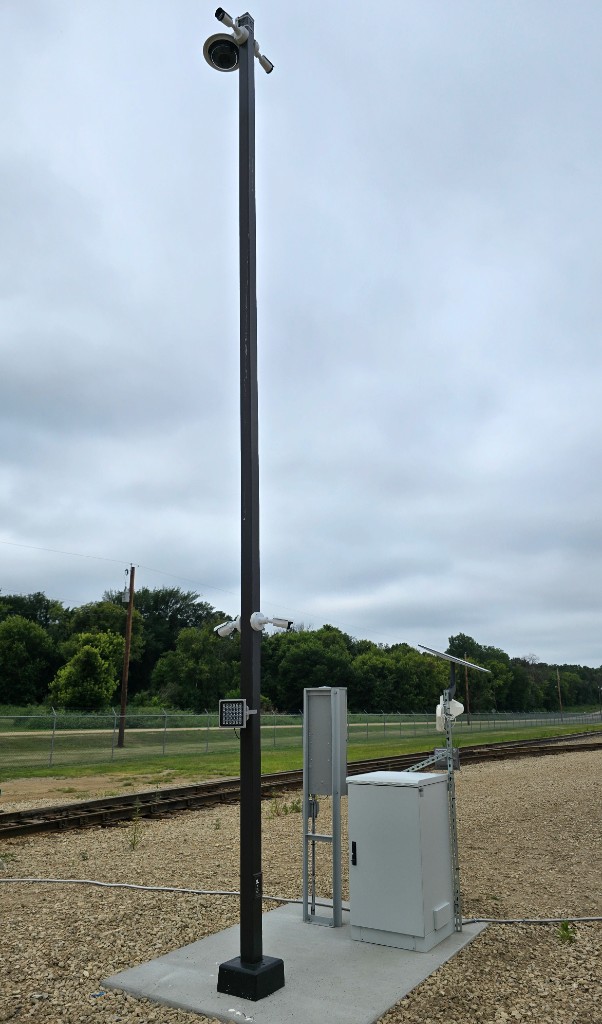
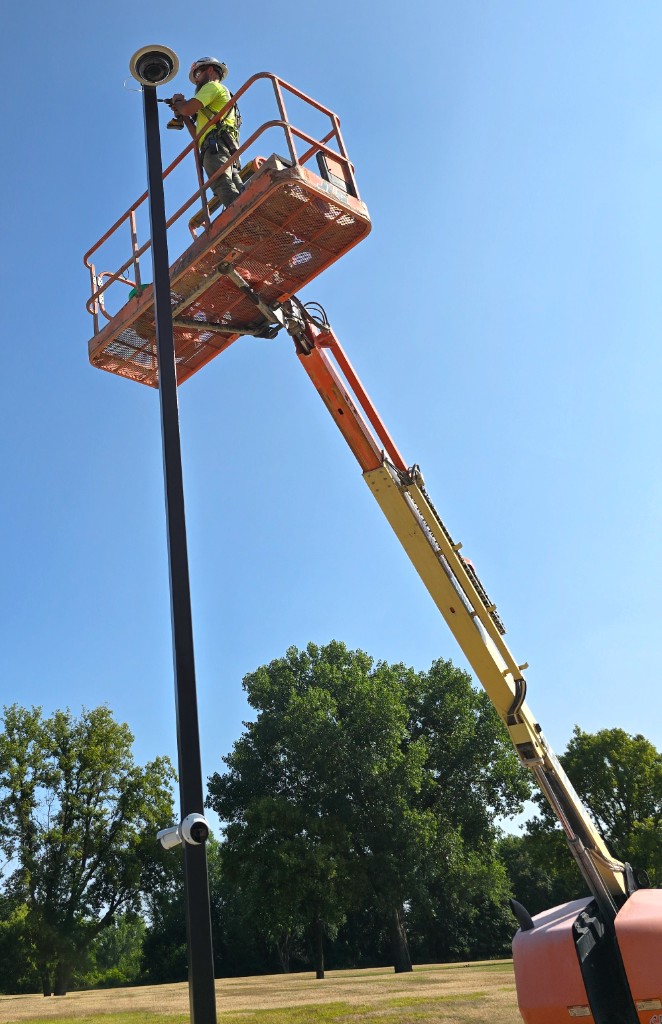
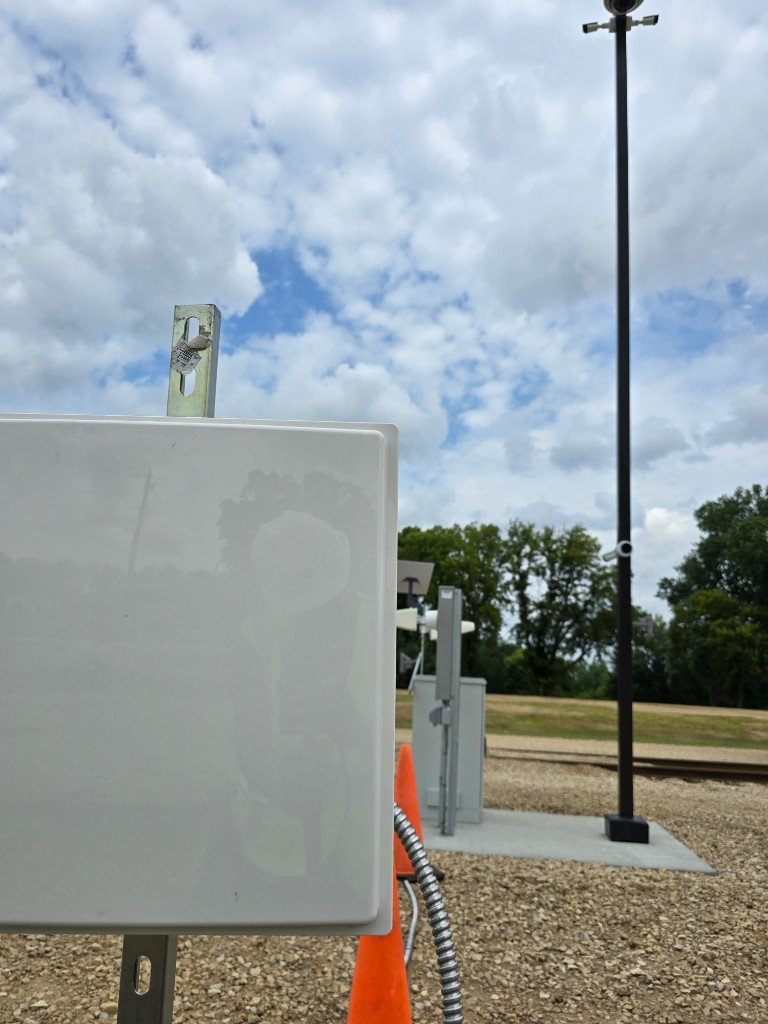
Instead of installing 10 different RFID reading stations, a facility may be able to collapse that infrastructure down to one light pole with a few cameras and an AI computer running the Canopy Vision platform.
A Practical Approach to Automated Railcar Tracking
Automated railcar tracking is not a one-size-fits-all problem.
The best approach depends on the yard layout, how cars move through the facility, what infrastructure already exists, and how accurate the tracking record needs to be. GPS devices, RFID readers, track wheel sensors, automated switches, and cameras with AI can all play a role, but each option has different costs and limitations.
For many industrial facilities, the goal is not to build the most complex system possible. The goal is to create a practical, reliable way to know where cars are located without depending entirely on manual updates or yard walkdowns.
By combining existing railcar identification technology with camera-based AI, facilities may be able to improve visibility, reduce manual effort, and lower the amount of hardware required to track railcars across the yard.
Looking for a Practical Way to Track Railcars in Your Yard?
If your facility relies on manual railcar updates, yard walkdowns, or incomplete tracking data, Canopy Vision can help you explore whether camera-based AI railcar tracking is a good fit for your site.
Our team can review your yard layout, existing AEI/RFID infrastructure, camera placement opportunities, and operational goals to help identify a practical path toward automated railcar tracking.