Explore practical examples of how AI vision can help industrial teams monitor operations, inspect assets, detect visible conditions, and support better decision-making.
Canopy Vision helps industrial teams apply AI vision to real operational challenges across rail, safety, process monitoring, asset tracking, and inspection workflows. This library highlights practical examples of how camera-based AI can be used to detect visible conditions, monitor activity, and support better operational decision-making.
Rail Yard Tracking
Watch how AI vision and RFID work together to track railcar movements across your yard. This full demo walks through how cameras, software, and reporting come together to give operations teams continuous yard visibility.
Explore Automated Rail Yard TrackingRail Yard Tracking
A quick overview of how Canopy Vision helps rail operators track car movements, reduce manual checks, and improve visibility across the yard using strategically placed cameras and integrated software.
Learn more about Automated Rail Yard TrackingTruck Scale Monitoring
AI vision was used as a backup monitoring system to count trucks, read truck numbers, and capture scale values. This helped the site identify process issues that were contributing to major inventory write-downs each year.
Discuss Your Use CaseMining Sump Monitoring
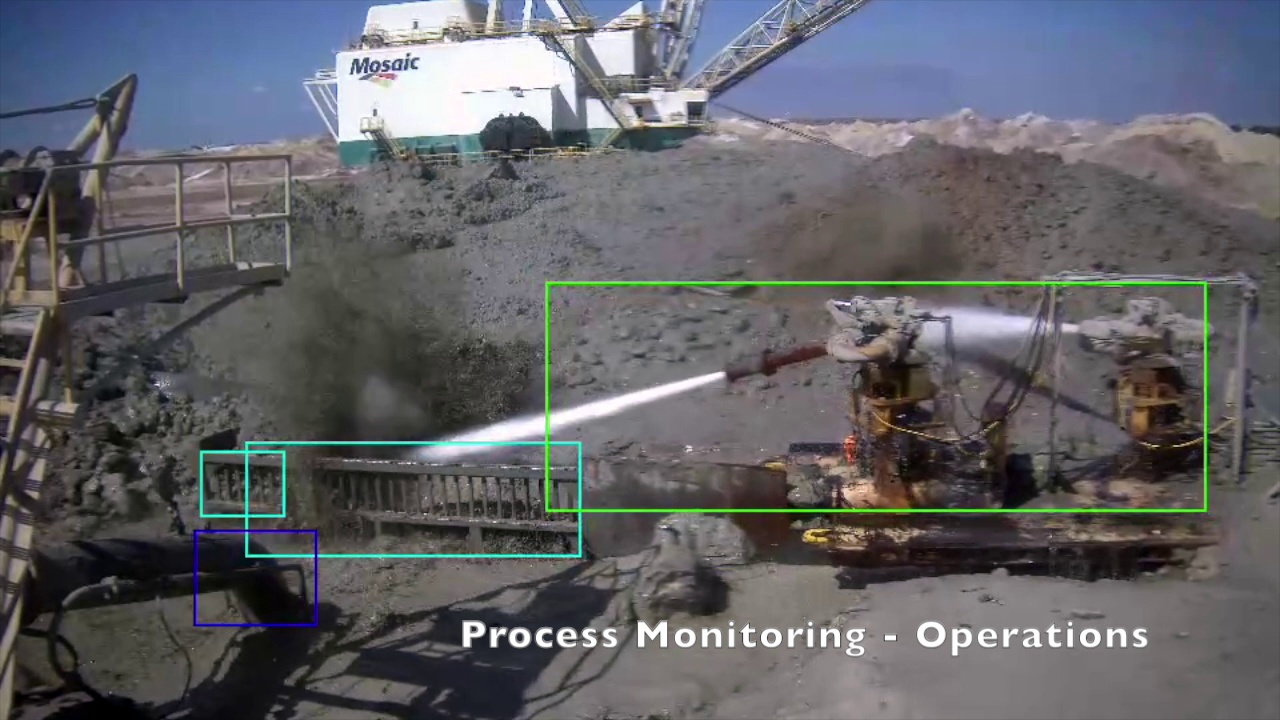
Cameras were used to observe a dirty, difficult-to-monitor process and send dozens of visual datapoints to the PLC for automated control. This gave the operations team better visibility into process conditions that were hard to measure with traditional sensors alone.
Discuss Your Use Case
Tank Overflow Detection
AI vision provided a redundant level detection system for a foamy process where traditional sensors could become fouled or return inaccurate readings. The camera helped detect visible overflow conditions and provided an added layer of process reliability.
Discuss Your Use CaseDragline Bucket Counting
AI vision counted dragline bucket cycles to help operations teams evaluate performance by operator instead of relying on handwritten notes. The data supported better benchmarking, bottleneck identification, and production planning.
Discuss Your Use CaseRailcar Number Recognition
AI vision was used to read railcar numbers and support automated asset tracking. This helped improve visibility into railcar movement and reduced reliance on manual identification.
Discuss Your Use CaseTruck Unloading Monitoring
AI vision monitored a hazardous unloading process and triggered alarms when the procedure was not being followed safely. The system also helped operations teams compare driver, trucking company, and truck configuration performance to reduce bottlenecks and support better contracting decisions.
Discuss Your Use CaseCanopy Vision helps industrial teams evaluate camera-based workflows, scope pilots, and move from concept to deployment with practical AI vision software.
Discuss Your Use Case