Can’t find your answer? Contact us or email sales@canopy-vision.ai.
Fit & qualification
What is industrial AI vision?
Industrial AI vision combines cameras and computing to detect and monitor conditions at industrial facilities and operations. The “industrial” part refers to capabilities needed for environments that run 24/7—indoors and outdoors, on secure isolated networks, or at remote sites with limited power or connectivity.
How do we determine whether our use case is a good fit for AI vision?
A good rule of thumb is whether an experienced operator could identify the event visually. Whether it is process monitoring, equipment tracking, defect detection, or another condition, if it can be seen on camera, it is usually a good fit for AI vision. If the event is not visually observable, AI vision is often not the right tool.
Read more: The lifecycle of a facility’s first AI vision project
Getting started & pilots
What information do you need to evaluate an AI vision use case?
Ideally, we would like to see the use case through video, photos, or a site visit. We also need to know how often the event of interest occurs (daily, weekly, monthly). From there, we can usually assess complexity and prepare a scope for a pilot.
Do you offer pilot projects or proof-of-concept deployments?
Yes. We prefer to start new engagements with a minimum viable pilot, typically about three months in duration and at a fixed cost. This reduces initial investment and shortens time to value.
How long does a typical pilot or deployment take?
We aim to deliver a successful pilot outcome within about three months, including hardware installation and model development. Permanent deployment timing depends on the number of cameras and whether additional infrastructure is needed (power, networking, servers, etc.).
Does an AI vision system require changes to our existing process?
Usually not. AI vision is typically added as a monitoring tool or data source alongside existing workflows. Many projects include dashboards that help employees act on detections without disrupting day-to-day operations.
Technical & IT/OT
Can Canopy Vision work with our existing cameras and equipment?
Yes. Canopy Vision can work with most network cameras, including thermal cameras, and can run on most NVIDIA-based GPU devices. Contact us if you have questions about hardware selection—we are happy to help.
What lighting and camera conditions are required?
The camera needs a clear view of the area where important events occur. Lighting can come from existing facility lighting or infrared illumination, often built into the camera. In dusty or dirty areas, self-cleaning cameras may be required. We often start pilots with lower-cost camera hardware and determine during the pilot whether self-cleaning equipment is needed.
Can the system process video locally at the edge?
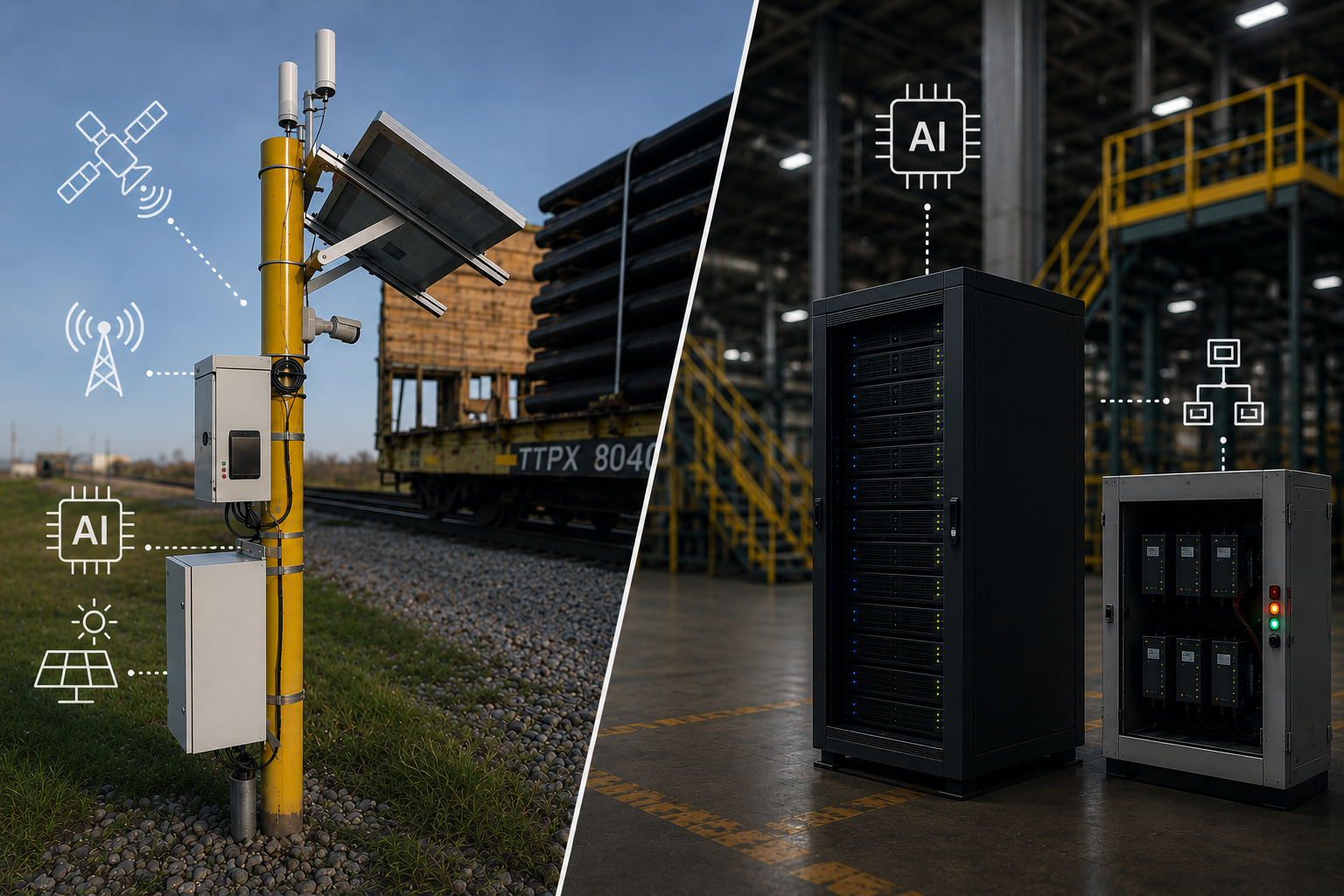
Yes. One of the key benefits of Canopy Vision is the ability to process multiple video streams locally on-site. Edge processing reduces network bandwidth, keeps sensitive data under your control, and supports stricter IT/OT cybersecurity policies.
How does Canopy Vision handle data security and isolated OT networks?
Because Canopy Vision can run entirely at the edge, it can be deployed behind firewalls on isolated OT networks without requiring cloud connectivity. Recorded and generated data stays on-site, giving customers direct control over storage, access, and retention.
Can Canopy Vision integrate with PLC, SCADA, and OT systems?
Yes. Many Canopy Vision projects integrate with PLCs and other OT systems. A documented API is also available for teams that want to build custom integrations.
Cost & delivery
What factors affect the cost of an AI vision deployment?
The biggest cost drivers are the number of cameras and the complexity of the solution. For example, tracking objects across eight cameras at a remote site without power or networking will cost more than a single-camera equipment condition monitor.
Read more: What impacts the cost of an industrial AI vision project
What services does Canopy Vision provide?
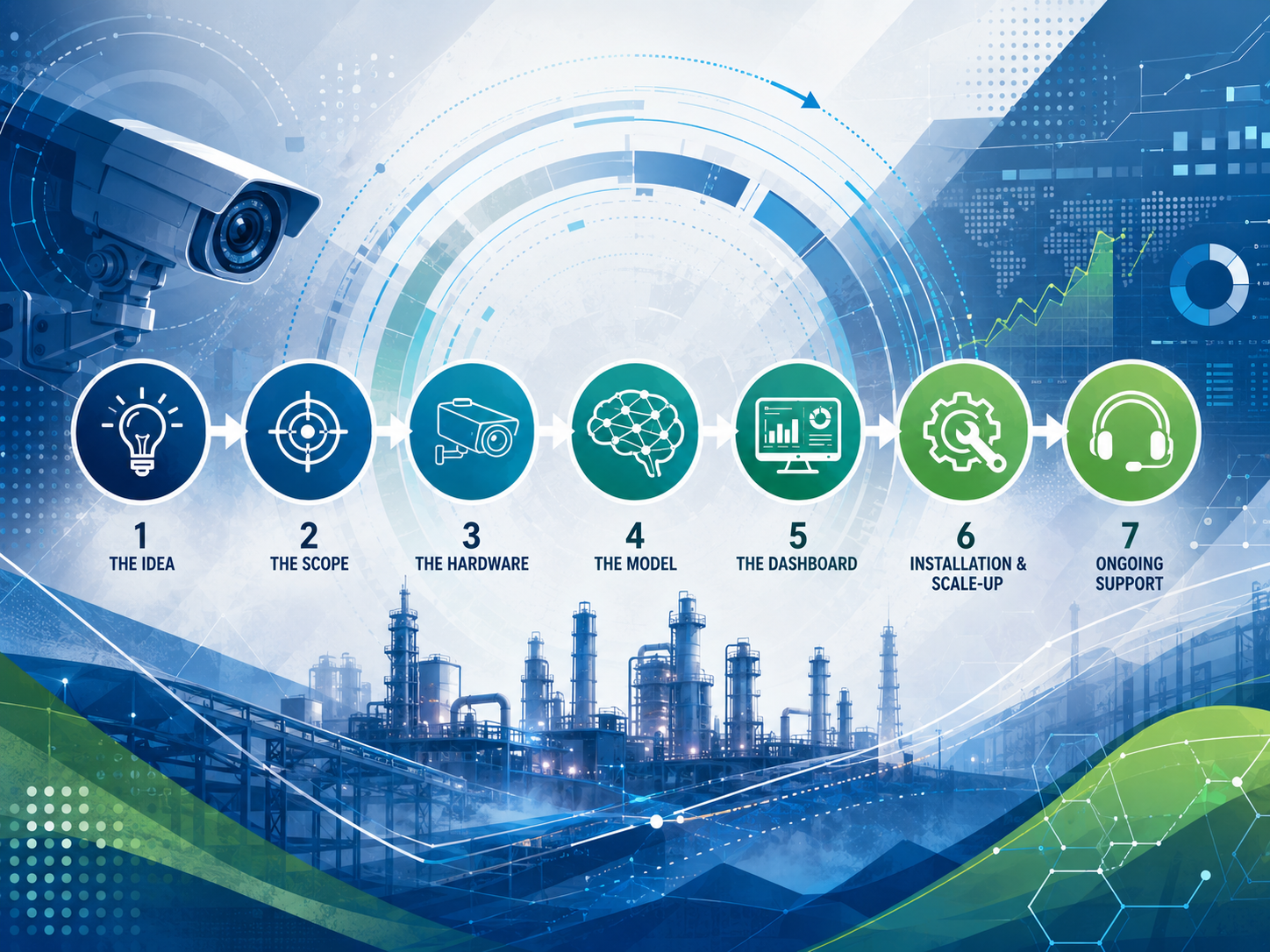
The Canopy Vision team can support the full project lifecycle: scope development, hardware selection and preparation, installation, AI model development, dashboard configuration, and ongoing support after deployment.
Product & trust
Can you build a custom AI model for our specific process?
Yes. Almost every project includes a custom model, because each customer’s process is different. In most cases, you retain ownership of models developed for your facility—we do not resell or reuse your custom models for other customers. Shared models are used only in specific productized solutions, such as rail yard tracking and track inspection.
Read more: How the Canopy Vision platform accelerates deployments
Does Canopy Vision use facial recognition? How is employee privacy handled?
We do not use facial recognition as a standard part of the Canopy Vision platform. Privacy practices are defined with each customer based on site policies and project scope. Because deployments typically run on-premises, customers retain control over video storage, access, and retention.