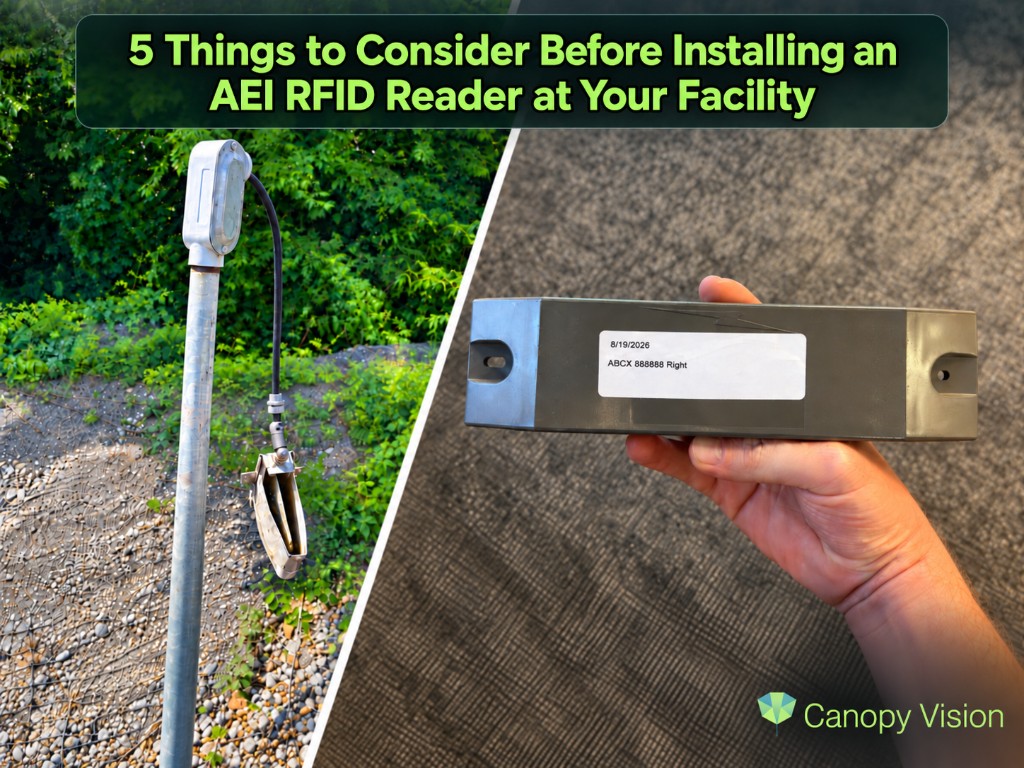
You might feel like your facility is behind the times when it comes to railcar tracking—you are not alone. Many industrial facilities, even large ones that receive over 200 cars per day, still do not have a proper system for tracking railcars as they enter and leave a facility, let alone within the yard. Facilities often rely on the information provided to them by the railroad and focus more on the total number of cars on-site rather than focusing on individual cars. If your facility pays demurrage, then you are likely leaving money on the table (or in the yard) by not effectively managing your railcar inventory…that’s a whole other blog post.
Before you can optimize cars on-site, you need to begin keeping track of which cars are coming and going, by car number. If you’re like most facilities, this means having an operator walk the yard every day to write down the list of car numbers by track. Better facilities will have the locomotive operator keep track of how many cars are moved from track to track, coupled with some rudimentary software to assume which car numbers are being moved. The best facilities will have a combination of AEI RFID readers, cameras, and software to have full real-time visibility into car movements and current car positions. For an overview of how those pieces fit together, see what automated railcar tracking means for industrial yards.
If you’re like most, you might already have one AEI RFID reader at the entrance of your facility. And don’t be ashamed if it hasn’t worked in several years (this happens more often than you would imagine). You may have stumbled upon this blog post because you are looking for a solution but don’t want to read pages and pages of highly technical UHF RFID reader specification sheets to understand if a manufacturer’s device is capable of reading the cars in your yard. You probably also wonder what the cost is to implement such a system, how many devices you need, and how the system might integrate with your company’s systems and databases. Our article on what impacts the cost of an industrial AI vision project covers how hardware, installation, and connectivity affect budget—the same factors apply to yard entrance readers. Don’t worry—the majority of industrial facilities we talk to are in this same position.
As I write this post, I ask myself, “Why do most industrial yards still not have proper railcar tracking in 2026, the year of AI?” Canopy Vision is looking to change that. By the end of this blog post, you should be able to understand what type of system you need and properly vet potential solutions and vendors to see if they are a fit for your yard. (And of course, please don’t forget to contact us directly.)
1. Start with your rail yard pain points
You should begin by asking, “What are my biggest pain points with my rail yard and rail inventory today?”
Some common answers might be:
- “Demurrage charges are too high, and I’d like to reduce them.”
- “I don’t like having employees walk the yard every day because it’s a waste of time and increases safety risks.”
- “I often spend time hunting for a specific car, which means hours of combing through data and walking the yard.”
- “We frequently have a bottleneck where we don’t have enough empties or where it takes time to shunt our empties to the loadout stations.”
These problems can all be addressed by having more or better tracking solutions. For larger yards, you’ll obviously need more sensors (whether they be cameras or RFID readers). For smaller yards, sometimes a simple RFID reader at the entrance/exit, coupled with the right software, can provide you with most of the benefit.
2. Understand AEI tags—and why direction of travel matters
One of the best ways to identify railcars at specific points in your yard is to use an AEI RFID reader. Everyone is familiar with what an RFID reader is—but when it comes to railcars in North America, the phrase AEI is important to know. AEI stands for Automatic Equipment Identification. You might also see the acronym ATA, which stands for American Trucking Association, or AAR, which stands for Association of American Railroads. These acronyms can be confusing, so there’s really one thing you need to understand: the RFID tags that are affixed to nearly all railcars within North America conform to a specific standard adopted by the major railroads. This makes it easy for industrial facilities—instead of having different RFID readers for BNSF cars vs. CSX cars, you can install one reader, and it will work universally for all railcars, regardless of who the railcar belongs to. You can also rest assured that every car is supposed to have two tags in consistent positions and that the tags do not require batteries. Every tag is supposed to report the car number (the same number painted on the side of the car), which side of the car the tag is mounted on relative to the handbrake, and other attributes about the car, like the car’s length, number of axles, and bearing type.
At most industrial facilities, the important information is the car number and the direction the car is moving. If you just have a single RFID reader and antenna, then you will not be able to determine which direction the car is moving. This is why most RFID readers for railcars will also have a second antenna, wheel sensors, cameras, or a combination of these to properly identify the car’s direction of travel.
So, at the very minimum, you should be looking for a system that can read the railcar numbers AND provide the direction of travel in a timestamped report. The Canopy Vision AEI RFID Reader pairs RFID with a camera at each pass-by point for that reason.
3. Choose reader and antenna placement carefully
The next question that arises is about the position of the reader—where exactly do I need to mount the reader and antenna(s)?
If you are only installing one RFID reader to track the cars on-site, then you would want to place the reader at the entrance/exit, prior to any internal yard switches. If you’re installing multiple readers throughout the yard to capture which major areas of the yard the cars are moving to, then ideally, you would look for locations where the tracks converge or are about to diverge, like at the entrance and exit of an internal sorting yard. Keep in mind that if you install the RFID antenna on one track and there is an adjacent track nearby, you have a high likelihood of accidentally reading RFID tags of cars on the adjacent track, leading to inaccurate data and confusion. (Cameras, wheel sensors, and software are all methods of reducing these errors.) There’s another gotcha—sometimes you can place an RFID reader at the entrance of your facility, but when the railroad places or pushes out cars, if it performs a lot of shunting operations, then the data can be noisy, with many RFID readings of the same car as it passes the reader back and forth during shunting. This can often lead to confusion about whether the car is on-site or if it has left. Proper RFID reader placement and software can really make a big difference, so be sure to discuss these concerns with any vendors you are considering to understand how they address this issue. For real-world examples of shunting noise and cross-track false reads, see common AEI RFID reader issues at industrial facilities and private rail yards.
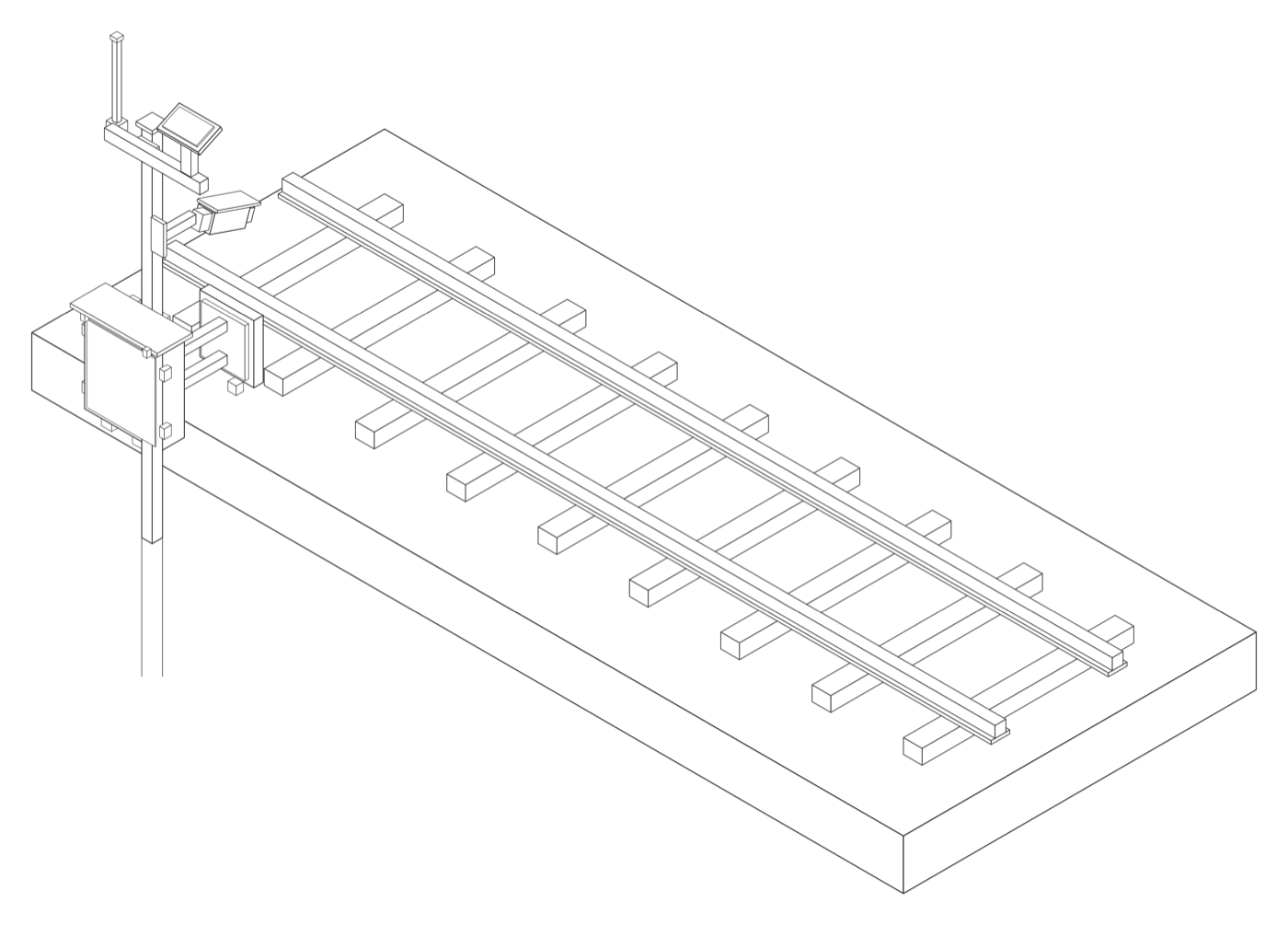
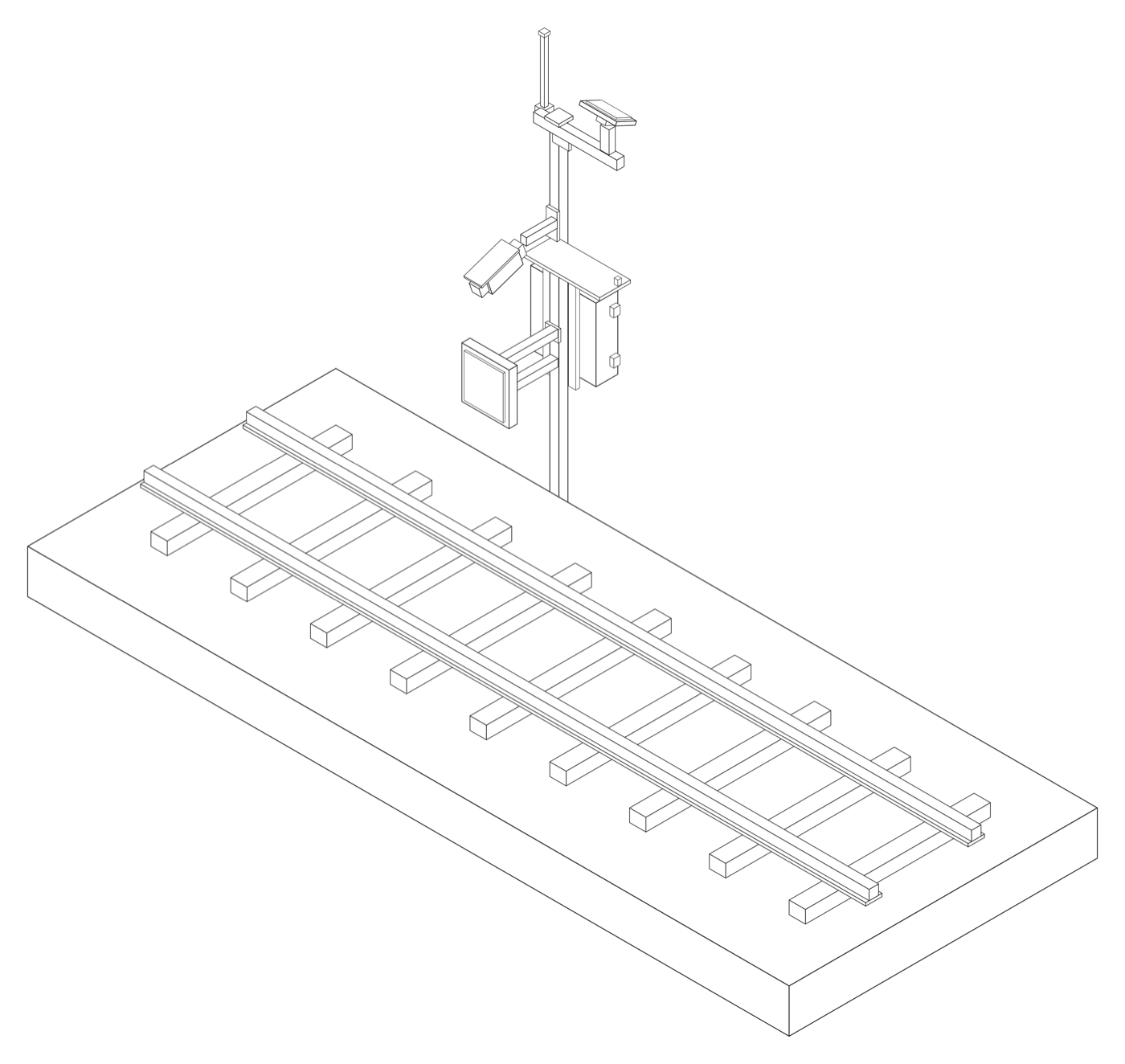
4. Plan power, connectivity, and IT integration
Once you’ve determined where you want the reader, you next need to figure out infrastructure and connectivity. What are the power requirements? What are the data needs? How will it talk to my internal databases and systems?
If you don’t already have power nearby, then you might want to consider a solar panel setup with a battery to reduce installation costs. In most locations, you will also not have networking (like Ethernet or fiber), so you’ll need to use a cellular, Starlink, or point-to-point network for connectivity. Most systems will come with a cellular router. You may already have a corporate data provider and be able to use a SIM card provided by your IT department, or you might need to purchase a data plan from the vendor (oftentimes coupled with other service or software agreements). This is a good place to get IT involved because they can help recommend their preferred option if there’s already a policy or preference internally. Yard entrances without grid power or wired networking are a common use case for solar and cellular deployments for remote AI vision.
And since we’re on the topic of IT, this is also when you would want to have IT discuss integration options with the vendor so your internal database systems can communicate with the RFID reader. Most AEI RFID reading systems have a cleanup step where they attempt to de-duplicate the noisy data so that consecutive reads of the same car are not duplicated many times. The data can then be sent to a destination on a schedule. For more modern systems, there might even be an API that IT personnel can use so that internal systems can query the RFID reader as needed. Other modern systems, like Canopy Vision’s AEI RFID reader, will have a fully functioning web portal so that you can search for records, view images of the cars, understand device health, and more from one central web dashboard.
5. Look beyond a single entrance reader
And lastly, you might be wondering what else is possible. Starting with one RFID reader at the entrance of your facility is the best place to start, but if you are exploring these options, you might wonder what else is possible if you were to add more sensors to your yard.
Fortunately, we spend a lot of time thinking about this so that you don’t have to. At Canopy Vision, we pride ourselves on helping industrial facilities and private rail yards improve their yard visibility by coupling AEI RFID readers with cameras and incorporating that data into a web dashboard. Learn how that scales across a yard in our automated rail yard tracking solution overview. We can propose hardware locations by looking at your yard on satellite imagery and give you a better understanding of the benefits you’ll see (such as optimizing car movements to reduce demurrage or reducing liability by having visual documentation of cars on-site).
If you’ve gotten this far, then you should contact us today to set up an introductory call and explore modern solutions for rail yard tracking.