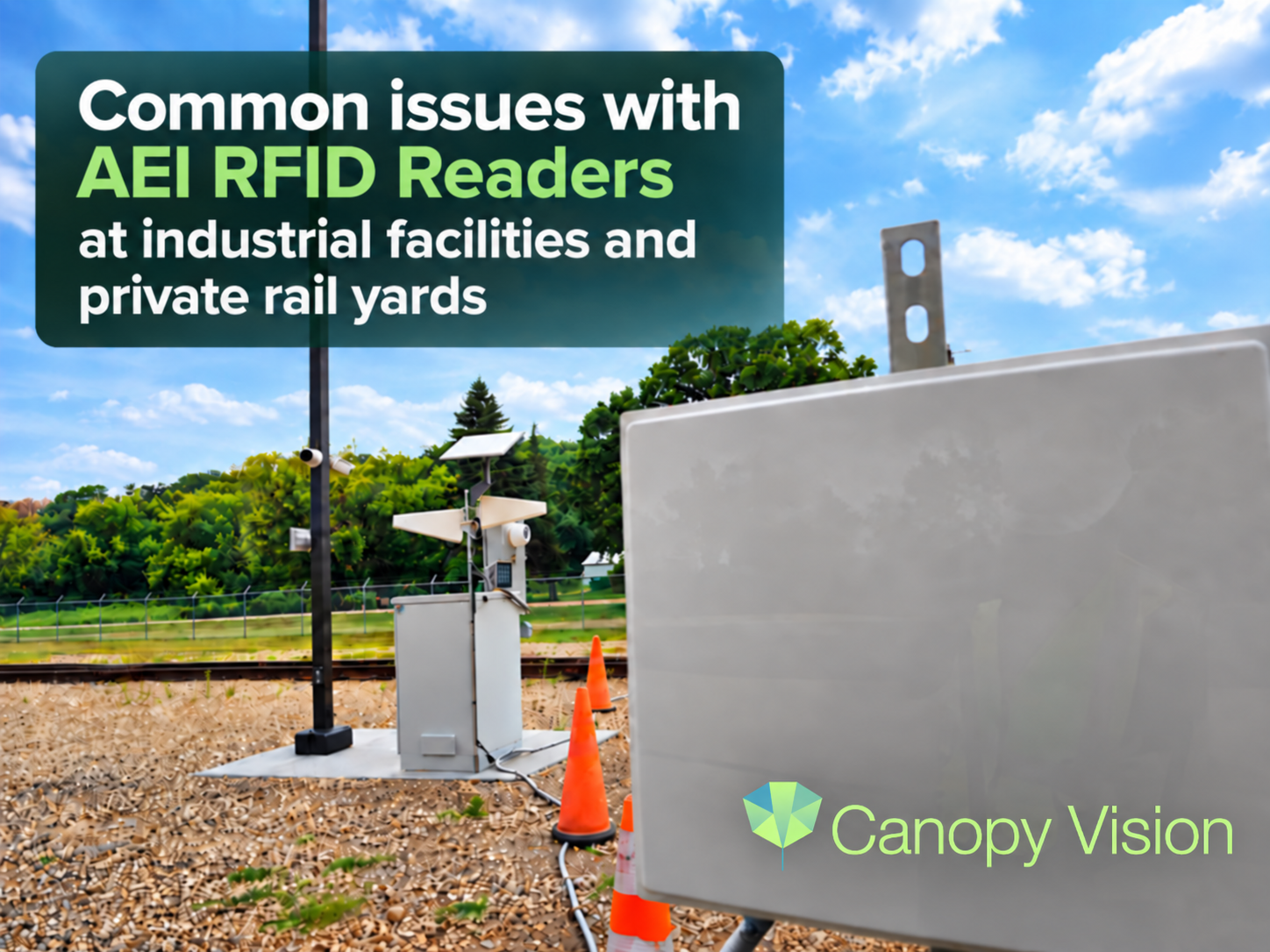
AEI RFID readers are a great way to read car numbers, whether at a loadout station, a scale, or at the entrance or exit to your property. These RFID systems automatically read the RFID tag that exists on North American railcars and can send that data to another external system.
The major Class I railroads rely on AEI readers to read railcar tags throughout North America, reading cars even up to speeds of 50 mph, providing insight into where specific cars are located any time the car passes one of these systems.
There are several problems that frequently occur with these systems when used in an industrial or private rail scenario, and I’ll address those issues here along with information for how you can overcome those issues and still obtain accurate railcar tracking.
Noisy data from shunting operations
It’s not uncommon to want an RFID reader at the entrance or exit of your facility. This allows you to accurately track which cars are on-site for demurrage and dwell time purposes.
The problem is that when the rail operator delivers cars to your facility, they might have a mixture of cars in the group (commonly called a consist) with some of those cars entering your facility and some of them continuing onward to the next destination. In order to separate the cars out, the locomotive and train crews need to perform shunting operations to separate the cars.
This process results in a lot of back and forth movements across the track where the RFID reader is. What this means is that the RFID reader is reading the same tags multiple times, creating noisy data that can be difficult to parse to determine which direction was the final direction for each car.
Wheel sensors are typically used to assist with this, but even with wheel sensors, the long length of cars, wheel spacing, and unpredictable movements of cars make it difficult to accurately determine which specific cars entered or left the facility.
A common workaround is to place the RFID reader further up or down the track, away from the switches, to make it more likely for cars to pass the RFID reader during normal travel instead of during shunting operations. While this definitely helps reduce noisy data, it also means you might have a reader located far enough up the track that it doesn’t see car arrivals until your own crew has pulled the trains past the reader. This leads to inaccurate inventory and will miscalculate your dwell time.
The same is true in reverse—your crew might push cars to the entrance or exit for the rail operator, pushing the cars past the RFID reader even though they haven’t yet left the facility.
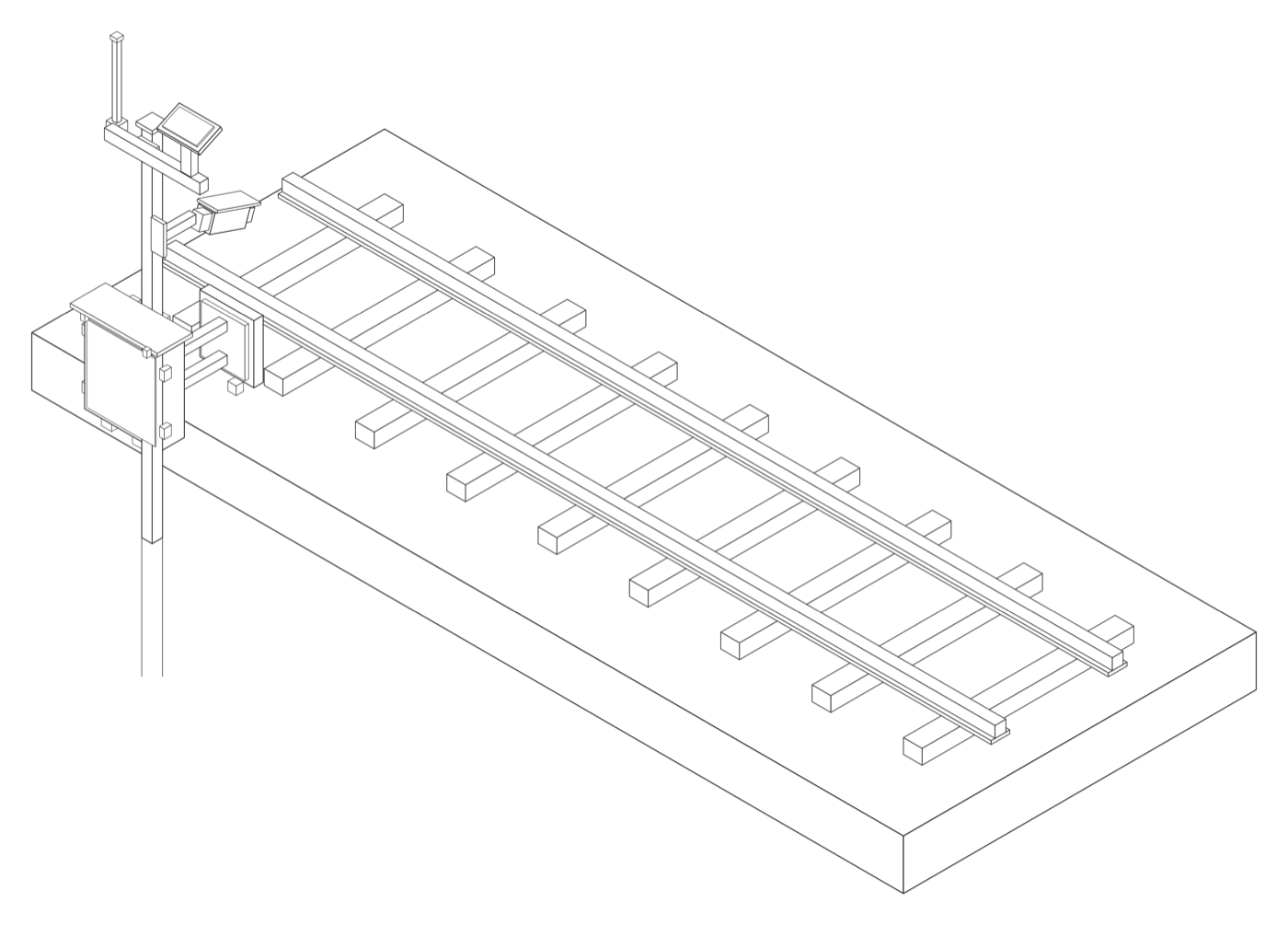
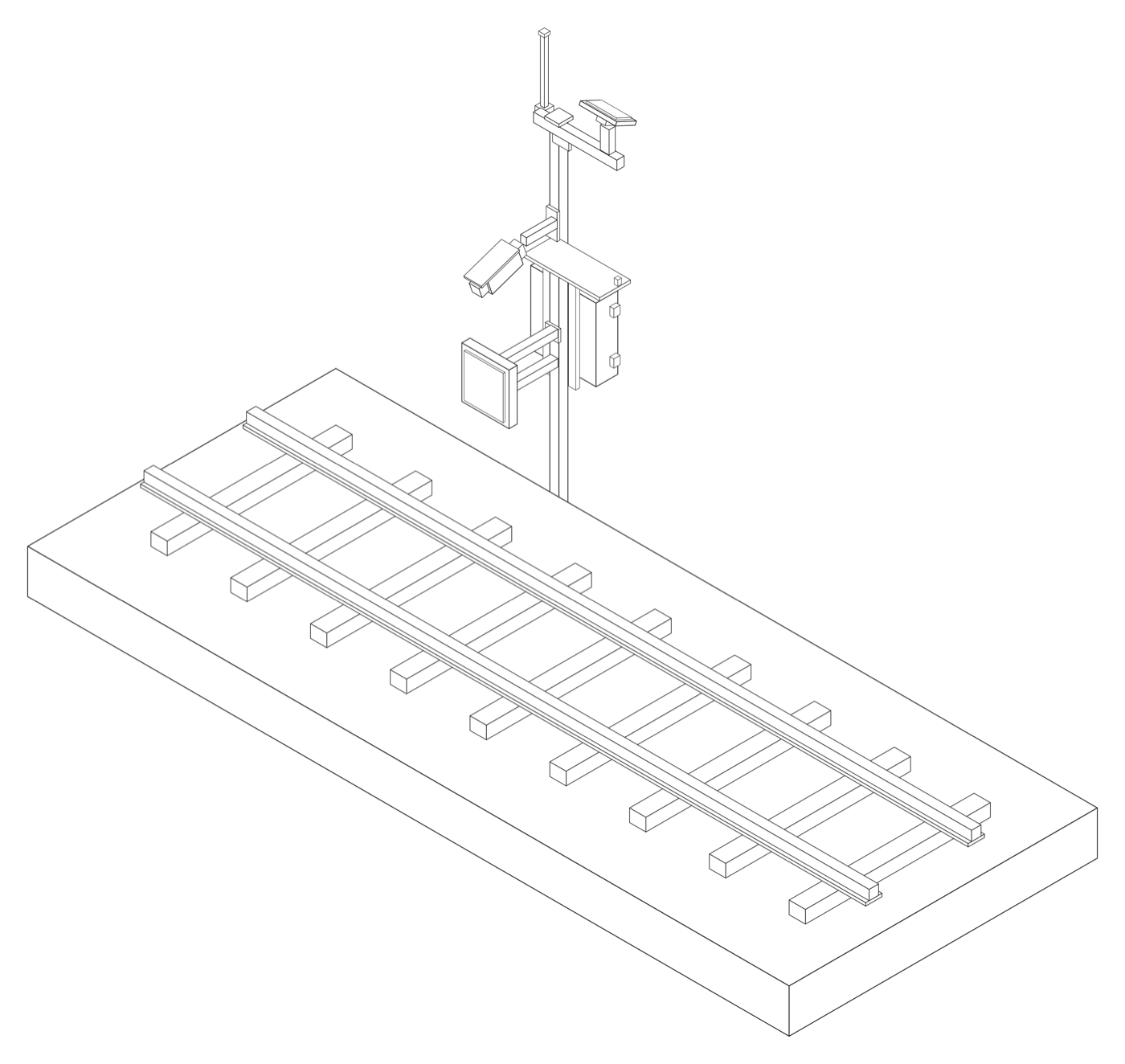
A solution we’ve come up with at Canopy Vision is to use an AI camera to determine car position. Because the camera can track cars and talk to the RFID reader, it can more precisely determine the direction of travel of a car past a reader. And since the camera is recording video—not only can you review the video to confirm, but you also have video and image evidence of every car that enters and exits your property—helpful for claims or incident review.
False reads from other tracks
AEI RFID readers operate by sending a radio frequency out through an antenna. When an RFID tag passes the antenna, the radio wave wakes up the tag, which alters the signal to reflect back a signal to the antenna. The antenna is typically located within 4 to 10 feet of the centerline of the track and pointed towards the track.
While most systems are not rated to read tags farther away than 10 feet, it is still possible. This means if you have tracks near each other, car movements on one track can still be picked up by a reader on the other track, leading to false positives and noisy data.
While this issue can be minimized by only activating the RFID reader when a wheel sensor is activated or by combining wheel sensor data with RFID readings, it’s not a foolproof method when the two tracks are connected by a switch and you are shunting cars using that switch.
With a camera, and the right AI models, you can add additional logic to filter out those false positives.
Slow or lacking software
Many AEI reader systems do not give real-time data and will instead send a txt file or email with the “consist” data. If you’re adding an AEI RFID reader system to your railyard, you should be able to expect real-time data from it. Furthermore, many systems do not include a web portal or dashboard.
With a Canopy Vision AEI RFID Reader, you’ll have access to an easy-to-use dashboard for reviewing car numbers and their images and videos. You can easily download videos and images for claims or incident review purposes. You can also use the Canopy Vision dashboard and features to track and optimize dwell time and demurrage, track materials loaded onto cars, and track other car events like inspections or brake checks.
Looking for better visibility at your entrance or exit?
If you have an industrial or private rail yard and are looking for more visibility into car movements, feel free to contact us below. We’ve helped many industrial facilities with more than just RFID tag reading. Our team has experience helping with demurrage optimization, loadout automation, and full yard tracking using our innovative AI camera solution.
If you are still in the planning phase, start with five things to consider before installing an AEI RFID reader at your facility. For a broader look at how RFID fits alongside cameras and other approaches, see our guide on automated railcar tracking. Remote entrance and exit points can also use solar and cellular deployments when grid power and wired networking are not available.